
Related
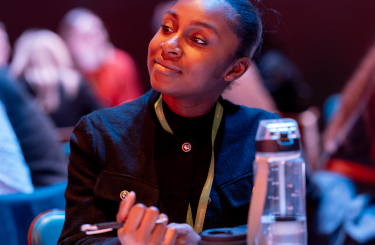
At a time of uncertainty and growing demand across civil society, this year’s London Funders Annual Conference brought together funders, communities and partners to reflect on what collaboration, leadership and long-term change now require. Across the discussions, one message became clear: lasting change in London depends less on programmes and more on relationships, trust and shared responsibility.
This second blog in our post-conference series looks outward to understand what holds London together, and what the capital can learn from other cities about resilience, civic participation and shared responsibility.
If the opening conversation centred on learning with London’s grassroots, this discussion widened the lens to the civic systems and conditions that enable a city to function, adapt to ensure communities are thriving and stay connected under pressure.
London is often described as a global leader in finance, culture, climate ambition and civic innovation. Yet the panel suggested that leadership cannot be assumed. It must be sustained through continuous learning, including from cities operating in very different political, economic and social contexts.
The discussion opened with a reframing of what makes London global. Not its skyline or balance sheet, but three forms of civic strength found in its communities:
Diaspora, as relationships and connections that link London to every corner of the world and offer alternative ways of living and doing.
Dynamism, as the energy and initiative already present across neighbourhoods, ready to be harnessed for change.
In this view, London’s global intelligence does not sit only in its institutions. It sits in the lived experience, cultural knowledge and relationships embedded across the city itself.
A central theme of the discussion was that the foundations of a thriving city are often not the ones that show up most clearly in strategies or capital plans.
Physical infrastructure matters. So do public services, assets and investment. But the panel argued that the ability of a city to hold together also depends on a second layer of infrastructure that is less visible, but equally decisive:
Together, these form the civic and social infrastructure that allows investment to translate into lasting change. Without them, even substantial funding can struggle to achieve impact. With them, relatively modest resources can unlock transformation.
For funders, this reframes the question from “what should be built?” to “what conditions allow change to take root and travel?”
The conversation then explored how cities enable people to participate in shaping their future.
Too often, access to space, decision-making or resources is governed through transactional permission. Systems designed for efficiency and control can end up feeling like border gates. Residents become applicants rather than participants, and community energy is filtered through processes that make people uncertain about being accepted or rejected.
The panel described a different model: permission as invitation.
In this framing, the role of institutions is not simply to regulate access, but to actively welcome participation and create the trust required for shared problem-solving. It moves civic life away from gatekeeping and towards social learning, where rules and norms evolve with communities rather than being imposed on them.
For a city as complex as London, the shift from permission to invitation is not a change in tone alone. It is a change in how power is exercised and perceived.
Global learning offered another important lens. Examples shared from outside the UK illustrated how trust-based approaches can operate at pace and at scale, including models where small resources are distributed directly to residents to support community-led action.
A practical case study from Martin Tan, Chief Executive of The Majuirty Trust in Singapore challenged familiar assumptions about risk and accountability. During the pandemic, a fund was established to help local communities by supporting informal, ground-up projects. Small grants, up to $5,000, were paid directly into individuals’ bank accounts, an approach many institutions would consider too risky. The results were striking. Across 157 projects all of the funding was used appropriately and there were no grant defaults.
The wider point is not replication for its own sake. It is that trust can function like risk capital. When systems treat people as responsible and capable, people often respond to the standard that has been set. In that sense, trust is not only a moral aspiration. It can be a practical strategy that unlocks speed, creativity and care that more tightly managed systems struggle to achieve.
Resilience is frequently framed in technical or environmental terms, flood defences, heat mitigation, and emergency planning. The panel offered a broader interpretation rooted in whole-system thinking.
True urban resilience depends on multiple, connected forms of capital:
A story shared from Manchester brought this to life. Karl Astbury, Lead for Climate & Health at Resilient Cities Network shared an example of a community-led space created for residents to explore hope and imagination. This may not resemble a conventional resilience intervention. Yet Karl explored that when a neighbourhood’s immediate priority is food poverty, strengthening financial and social stability can also strengthen the capacity for climate resilience. If people are more secure, they are better able to respond to heatwaves, floods and disruption. Resilience is not only about the hazard. It is also about the conditions that determine whether communities can cope.
For funders, this reinforces the importance of investing in the foundations beneath crisis response, rather than treating environmental and social priorities as separate tracks.
The discussion also explored what funders can enable within local government, without turning community-led work into a rigid, top-down programmes.
Public bodies are often constrained from experimentation. Under financial pressure and high scrutiny, it can be difficult for councils and mayors to justify trialing new approaches, even where the long-term case is strong.
Philanthropy can help by absorbing some of that early-stage risk. It can fund pilots and new ways of working, and it can make innovation easier to defend publicly when political pressure rises. In practice, this support is not only about backing a single project. It can also involve investing in the less visible capacity that makes systems work, such as innovation roles embedded within local government that strengthen data, connect teams, break down silos and improve how decisions are shaped with communities.
This reframes the funder’s role. Not only a donor, but a partner enabling the conditions that allow cities to adapt and improve.
A final reflection returned to a practical truth beneath many funding systems. Collaboration is often asked of grassroots organisations, but it can be structurally inhibited by the conditions around them. When organisations compete for the same pots of money, collaboration becomes harder, even when everyone agrees it would be beneficial.
The panel offered a straightforward lesson for funders. If genuine partnership is the goal, remove the competition first. Fund multiple organisations and then support them to work together, rather than expecting collaboration to emerge within a scarcity contest.
Taken together, the discussion pointed towards a clear conclusion. London’s future strength will depend less on its global status, and more on the health of the relationships and systems beneath it.
That includes:
None of these shifts is simple. But each expands what becomes possible.
Ultimately, the discussion returned to a question that echoes through debates about London’s future: who is the city for?
A global city can generate opportunity, innovation and cultural exchange. But without deliberate attention to inclusion and participation, those benefits remain unevenly shared. Strengthening the invisible infrastructure of trust, relationships, and civic capacity is therefore not peripheral to London’s success. It is central to whether the city becomes more connected or more divided in the years ahead.
If London’s global intelligence sits within its communities, then London’s task is to invest accordingly. Not only in what can be built quickly, but in what can hold over time.
_____________________________________________________________________
Our thanks to our panellists for their generosity, insight and experience: