
Related
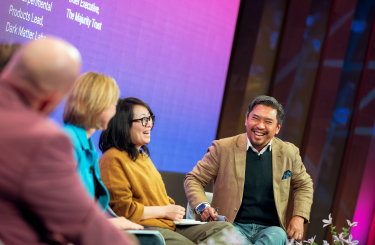
At a time of uncertainty and growing demand across civil society, this year’s London Funders Annual Conference brought together funders, communities and partners to reflect on what collaboration, leadership and long-term change now require. Across the discussions, one message became clear: lasting change in London depends less on programmes and more on relationships, trust and shared responsibility.
The opening session returned attention to where change in London, and across the UK, so often begins, within communities themselves.
Across the capital, grassroots organisations are navigating rising demand, constrained resources and complex social pressures. Yet speakers described a landscape rich in knowledge, creativity and determination, where local leaders are already shaping responses to inequality and environmental change beyond the reach of formal systems.
This distinction matters. If grassroots organisations are understood primarily as service deliverers, funding naturally centres on short-term outputs. If they are recognised as agents of long-term change, the role of funders shifts fundamentally, from directing activity to enabling leadership. Throughout the conversation, this reframing surfaced again and again. The future of London’s civil society will not be built for communities, but by them.
The importance of grassroots groups came into sharper public view during moments of crisis, including the pandemic, the cost-of-living emergency and widening social inequalities. In each case, community organisations moved quickly, flexibly and relationally, often reaching people and places beyond the grasp of statutory systems.
But crisis response alone cannot define the future. Remaining in permanent emergency mode risks locking funding and delivery into short-term maintenance rather than long-term transformation.
Here the conversation sharpened. Funders were challenged to move beyond sticking-plaster responses toward identifying the lead domino, the intervention that can unlock wider structural change when shifted through community-led dialogue. This reframes success itself.
The ultimate test of effective funding is not the scale of activity sustained, but whether underlying need begins to reduce as systems are rebuilt from within communities rather than around them.
Several enabling conditions surfaced repeatedly.
Long-term investment creates the stability required for organisations to focus on systemic progress rather than organisational survival. Relational funding builds trust, honesty, and shared ownership between funders and communities. Support for leadership and their wellbeing recognises that sustained social change depends on people who are resourced, connected and able to continue.
Speakers emphasised that wellbeing cannot be treated as peripheral. Grassroots leaders are often required to be strategist, counsellor, advocate and employer simultaneously, while remaining in daily proximity to trauma, poverty or exclusion. In this context, organisational safety begins with the safety of leaders themselves. Dedicated wellbeing funding therefore emerged not as an optional support cost, but as core infrastructure for long-term social change.
Taken together, these shifts move funding away from episodic intervention and toward enduring partnership.
A second thread running through the session concerned how systems understand need.
Institutional processes often prioritise speed. Define the problem, design the intervention, deliver the programme. Yet speakers emphasised that meaningful change begins earlier, in shared discovery grounded in lived experience.
This requires time, humility and proximity. It means treating community knowledge not as anecdotal evidence but as expertise. Contributors argued that trust must often precede funding rather than follow it, and that lived experience should be recognised as a legitimate form of authority in shaping priorities and solutions.
Without this shift, even well-intentioned interventions risk producing outcomes that are visible yet superficial, benefiting institutional reputation more than community reality and leaving residents fatigued by repeated consultation without lasting change.
When discovery is rushed, even well-resourced interventions can misfire. When discovery is genuine, responses are more likely to be trusted, relevant and sustainable. For funders, this represents a subtle but significant shift in mindsets, from authority toward curiosity and from extraction toward reciprocity.
Beneath these discussions sat a deeper structural question: who holds power to define change, and how is that power shared?
Funding relationships inevitably shape who decides, who leads and whose knowledge counts. Moving toward relational, trust-based and long-term approaches is therefore not only a technical adjustment. It is a redistribution of influence across the system.
This does not diminish the responsibility of funders. On the contrary, it clarifies it. The task is not to withdraw, but to act differently by creating space for community leadership, sharing risk rather than transferring it, aligning resources with long-term outcomes and recognising that accountability can be mutual rather than one-directional.
Discussion of participation also moved beyond principle toward practice. Participatory processes do not need to be perfectly ‘pure’ to be meaningful. What matters is transparency about where decision-making authority genuinely sits. In some place-based approaches, local communitiesshape recommendations while trustees retain final legal accountability, paired with a commitment to explain any divergence openly and face to face.
Experience suggests that when residents are trusted with real influence, their collective judgements often align closely with professional assessments, reinforcing community insight as credible expertise rather than consultative input. Such shifts are complex and sometimes uncomfortable, yet they are increasingly necessary if funding is to match the scale and duration of the challenges London faces.
These reflections are not only philosophical. Across the sector and within London Funders’ membership, they are already reshaping funding practice in tangible ways:
Relational funding was also described in more intimate terms. Moving beyond delivery contracts toward genuine partnership requires openness not only about outcomes, but about purpose, pressure and constraint on both sides. Grassroots organisations spoke of the importance of understanding a funder’s own vision and internal challenges in order to align effort honestly.
Examples of multi-year unrestricted funding illustrate how depth of relationship, built through time, trust and shared learning, can unlock forms of impact that short-term, output-driven grants rarely reach. None of these actions alone is transformative. Together, however, they begin to form the conditions in which systemic change becomes possible.
Stepping back, the conversation reflected something broader than funding practice alone.
Across civil society, there is growing recognition that complex social challenges cannot be solved through linear programmes or isolated interventions. Change is relational, cumulative and shaped by trust built over time. Grassroots organisations often understand this intuitively because they live within the systems they seek to change. Their work rarely sits within a single issue, instead spanning housing, health, education, environment and belonging simultaneously.
For funders, learning with grassroots organisations therefore becomes a route to understanding how change actually unfolds.. This is not simply about improving grant-making. It is about reshaping the collective capacity of London’s civil society to respond to an uncertain future.
The themes emerging from this first discussion set the foundation for the conversations that followed throughout the day, from London’s role as a global city to the implications of devolution and the future of collaboration. Each returned, in different ways, to the same underlying question.
How can funders act together, alongside communities, to create change that lasts?
The question is no longer whether London’s challenges are complex, but whether funding systems are willing to evolve in response. If lasting change depends on trust, proximity and shared leadership, then relational funding is not an innovation at the margins. It is the foundation of the city’s future.
___________________________________________________________
Our thanks to our panellists for their generosity, insight and experience: