As part of Equity in Every Step, we are exploring what more inclusive, equitable and community-centred funding looks like in practice. Supported by The National Lottery Community Fund, this work forms part of the Collaboration Circle’s ongoing effort to rethink how money flows, how decisions are made and how power is shared.
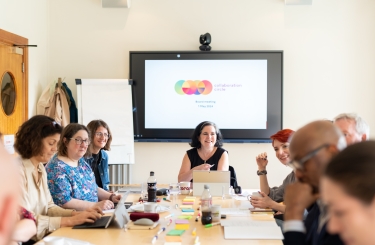
Last month, we convened Reimagining Funding Futures, a workshop bringing together funders, community groups, local leaders and practitioners. Using the Three Horizons framework, participants looked honestly at the present system, explored what transition could look like, and imagined the future they want to build.
As the year draws to a close, we are sharing some key reflections from the workshop and how these are shaping the next phase of Equity in Every Step.
Horizon 1: The System We’re Living In
Participants began with a candid assessment of the current funding landscape. Several shared challenges came up repeatedly:
- Language and labels often feel hollow. Terms such as like “grassroots” and “community-led” do not always match lived reality.
- Power sits heavily with funders. Decision making is often opaque, lack transparency, programmes end quietly, and communities can feel left behind.
- Processes are driven by fear, not trust. Bureaucracy, reputational risk and institutional priorities shape what gets funded and how.
- When funding stops, the impact is real. Loss of momentum, damaged trust and disrupted relationships were recurring themes common experiences.
Overall, participants felt that the current system too often prioritises compliance over connection.
Horizon 2: The Messy Middle of Change
Horizon 2 was described as ‘the in-between space where new approaches start to take root.’ Participants saw this as a period of experimentation, where funders are beginning to:
- Share power and grow participatory grant making
- Reframe risk as possibility rather than threat
- Test prototypes and local pilots
- Invest in community leadership
- Shift from transactional to relational ways of working
Participatory grant making was widely valued but also recognised as resource intensive. Funders spoke about the challenge of bringing boards along, while community members highlighted the emotional labour and vulnerability involved in stepping into decision-making roles.
Change in this space is non-linear, but participants felt this is where meaningful transformation begins.
Horizon 3: The Future We Want
When asked to imagine their ideal future, participants described a radically different funding ecosystem rooted in equity, belonging and shared stewardship.
Key themes included:
- A system beyond funders. Resources are pooled and shared, where money flows with dignity rather than bureaucracy, and where communities make decisions rather than simply advising on them.
- Leadership rooted in community: Young people and community leaders are trained, supported and empowered, with leadership intentionally rotating to create space for others.
- Letting go of ego: Funders step back, remove ego from the process, and recognise that community organisations are the ones creating impact. Funding becomes a form of care, not control.
Across this Horizon, participants imagined a shift from a mindset of scarcity to one of abundance.
Why This Matters
Across all three Horizons, one message was clear: the funding system is at a turning point.
Participants highlighted the need for:
Greater transparency and trust in funding processes
Learning spaces that support honesty and experimentation
A genuine willingness to share power
As one participant put it:
"We are all part of the same system. The future depends on how we choose to shape it together."
These insights are directly shaping the next phase of Equity in Every Step.
What happens next
We are currently developing an open resource as part of Equity in Every Step. This will bring together tools, ideas, frameworks and case studies covering each stage of the grant making process.
For the Collaboration Circle, this will support funders to confidently pool funds through a shared, consistent and equitable system. It will also provide teams, who are working on delivering pooled funds, with clear, adaptable processes grounded in best and emerging practice.
Beyond the Collaboration Circle, this work aims to support wider adoption of approaches that embed equity across the entire grant lifecycle. Over the coming weeks, we will be collating and translating what we have learned into accessible, practical resources designed to challenge thinking and support funders to do things differently.
Keep an eye out for further updates in the new year or contact us to stay informed as the work develops.
A huge thank you to all of the funders, civil society partners and other stakeholders who took part in the workshops and shared their ideas so generously as part of this process.